
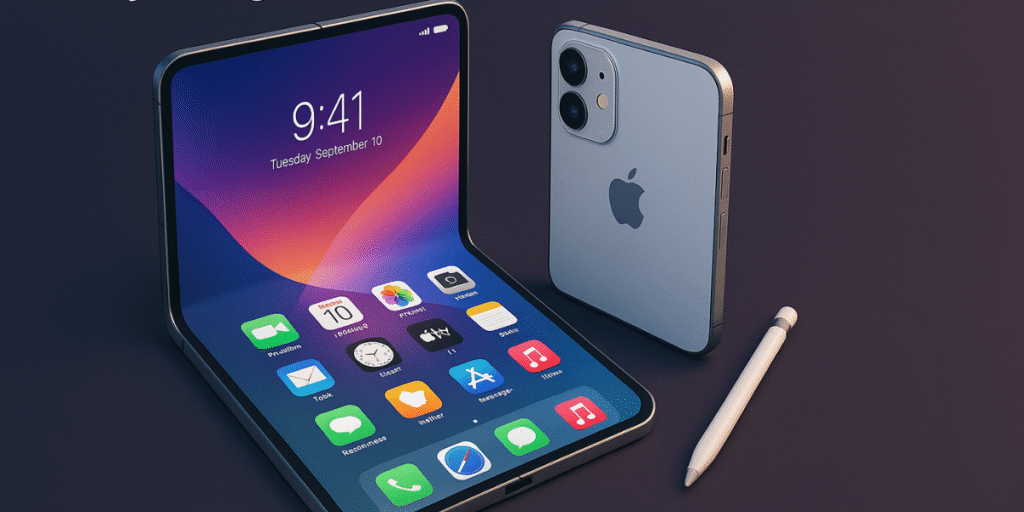
The tech world is buzzing with latest rumors about one of Apple’s most ambitious projects yet the foldable iPhone. While major competitors like Samsung and Huawei have already released multiple foldable devices, Apple has remained characteristically silent, leading fans and analysts to speculate what the Cupertino giant is secretly cooking up.
Now, in 2025, rumors and leaks are gaining momentum, offering glimpses into what could be a revolutionary product in Apple’s future lineup. Here’s everything we know so far about the foldable iPhone, from its expected features and design prototypes to OLED display innovations, stylus support, and its anticipated 2026 launch date.
Expected Features of the Foldable iPhone
Although Apple hasn’t officially confirmed the foldable iPhone, multiple leaks from reliable sources suggest it’s more than a concept:
- Dual-Screen or Single Foldable Panel: Apple is reportedly experimenting with two types of designs one with a hinge between two displays and another with a seamless foldable OLED panel.
- Durability Enhancements: Expect Apple’s emphasis on premium build quality with improved hinge mechanisms and ultra-thin glass (UTG) to increase screen resilience.
- Face ID + Under-Display Camera: Leaks suggest a possible under-display camera, keeping the front clean and uninterrupted for a futuristic look.
- Multitasking Capabilities: The foldable interface may bring iPadOS-like multitasking, turning the iPhone into a mini productivity machine.
- Improved Battery Life: Apple is known for optimizing battery performance, and a larger foldable body might allow for more powerful dual batteries.
Design Prototypes from Credible Sources
Reports from Bloomberg and reputable Apple analyst Ming-Chi Kuo point to several early prototypes under internal testing. The company has allegedly developed foldable screens in partnership with LG Display and Samsung Display, although it’s still unclear if Apple has finalized a form factor.
Some early concepts resemble the Galaxy Z Fold opening like a book while others mimic a clamshell design akin to the Z Flip series. Apple has even filed patents for foldable hinges and flexible display technology, reinforcing its long-term vision for foldables.
For more on Apple’s patents and foldable tech evolution, refer to this MacRumors report.
Advanced OLED Display Technology
One of the biggest technical hurdles in foldable phones is creating a durable, flexible display that maintains quality over time. Apple’s solution? Cutting-edge OLED display technology.
Rumors suggest Apple is working with BOE and Samsung Display to source foldable OLED panels with:
- Ultra-thin glass (UTG) for durability
- High refresh rates (120Hz or more) for smoother interactions
- LTPO (Low-Temperature Polycrystalline Oxide) tech for power efficiency
This aligns with Apple’s strategy of never being first, but always being better launching foldable hardware only when it’s refined to their standards.
Stylus Support: A New Era of Productivity?
According to reports, Apple is exploring Apple Pencil support for the foldable iPhone. This would be a major upgrade in terms of usability, transforming the device into a hybrid between an iPhone and iPad.
Why it matters:
- Artists and designers could use it for sketching on the go.
- Professionals might benefit from note-taking and document markup.
- It could rival the Galaxy Z Fold lineup, which already supports the S Pen.
Imagine a foldable iPhone that unfolds into a 7.5-inch canvas now enhanced with Pencil precision. This opens doors for creativity and productivity, redefining how we interact with smartphones.
Possible 2026 Launch Date and Market Impact
While many were expecting a 2025 release, recent analyst insights now point to a possible 2026 launch. Why the delay?
- Apple is prioritizing user experience and durability over being early to market.
- Foldable component costs remain high, and Apple likely wants to launch at a price point that justifies the value.
- The iPhone 17 series in 2025 will bring major updates, and Apple may not want to overshadow them.
If released in 2026, the foldable iPhone could land at a time when the market is more mature and consumer expectations are clearer. Apple’s late entry strategy could allow it to deliver a product that not only matches but surpasses current foldable devices in build quality, software integration, and long-term reliability.
According to a report from The Verge, Apple is testing foldable display panels that may debut within two years, hinting at a calculated and impactful launch.
Common Questions About the Foldable iPhone
Q: Will the foldable iPhone be more expensive than regular models?
Most likely. Foldables require advanced components, so pricing may start around $1,500 or more, positioning it as a premium-tier device.
Q: Will it replace traditional iPhones?
No. Foldables will likely be an alternative option, not a full replacement, catering to tech enthusiasts and professionals.
Q: Will it support iOS or a new interface?
It will run iOS, potentially with UI enhancements to support foldable interactions, similar to how iPadOS evolved from iOS.
Q: What’s the biggest risk for Apple?
Durability and long-term reliability. Apple will need to overcome skepticism around foldables’ wear-and-tear issues — something they’re clearly working hard to resolve.
Final Thoughts
The foldable iPhone may still be a year or two away, but excitement is building fast. With whispers of OLED innovation, Apple Pencil support, and multiple design prototypes already in testing, Apple’s foldable could redefine what a smartphone is capable of.
Whether you’re a tech enthusiast, an Apple loyalist, or simply curious about the next big leap in mobile design, one thing is certain: the foldable iPhone is poised to be a true game-changer.